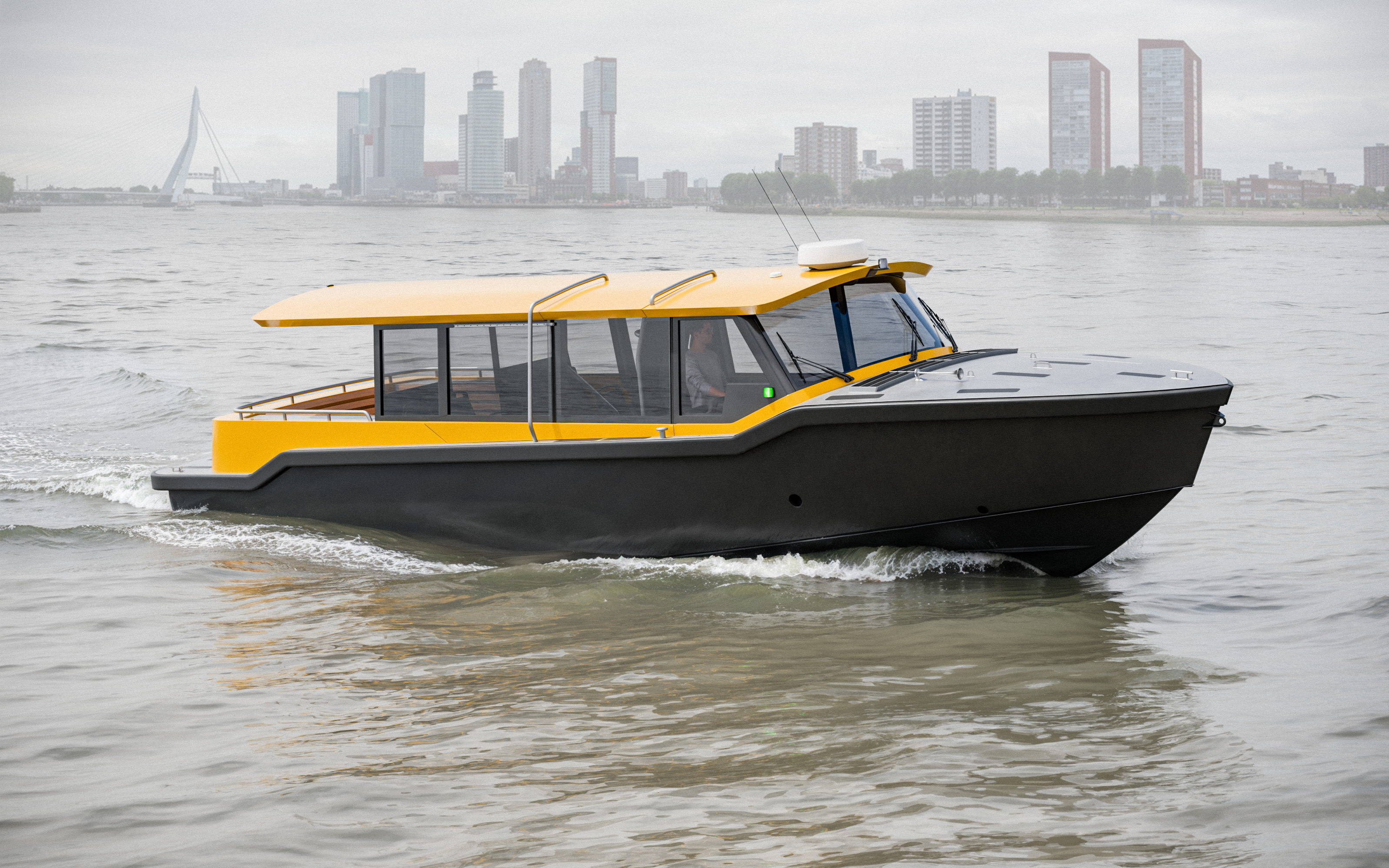
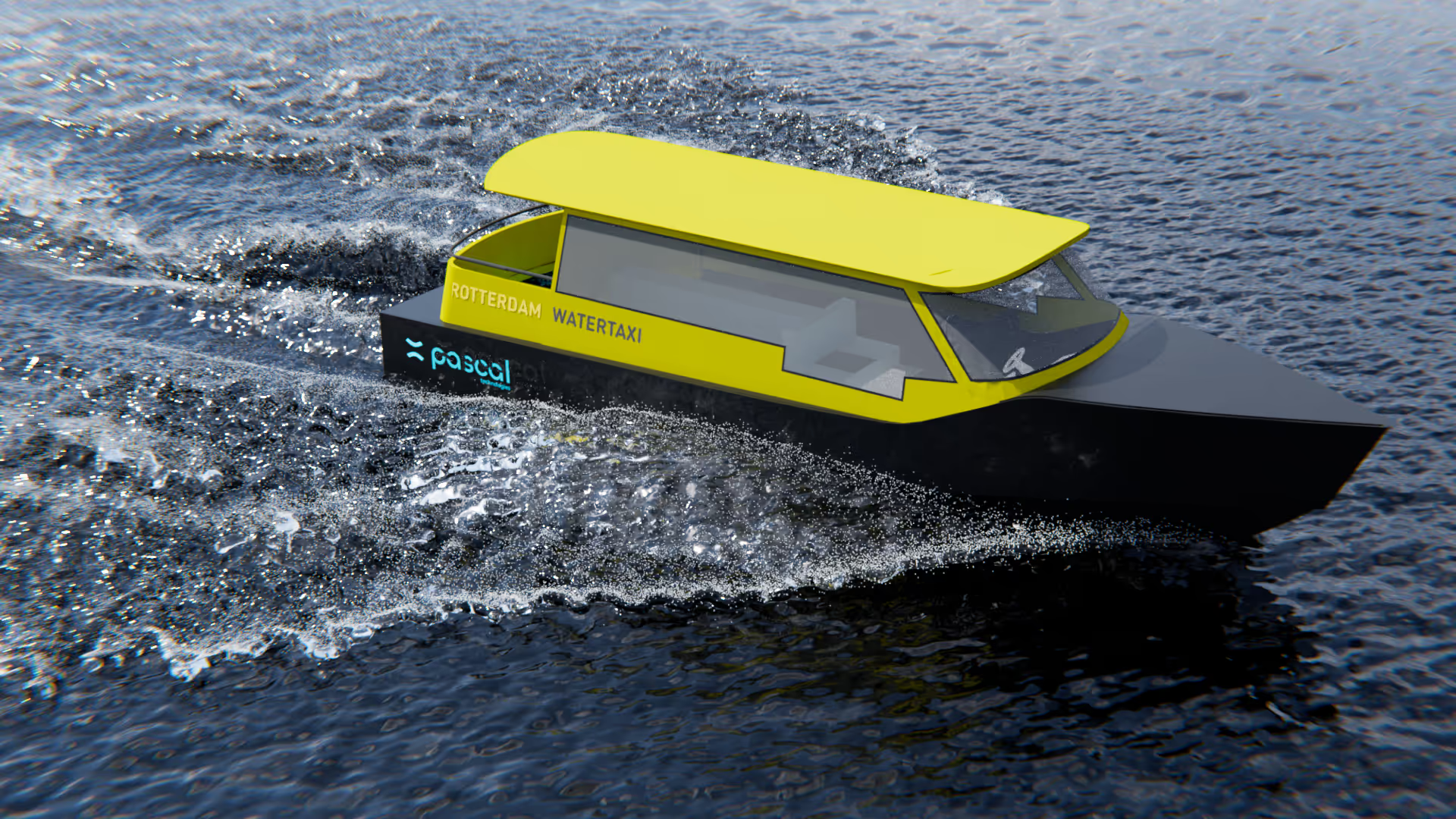
Join us in creating a greener future
Contact us today or book a demo with one of our vessels!
Air-based hull technology that reduces friction and energy use — unlocking maximum performance.
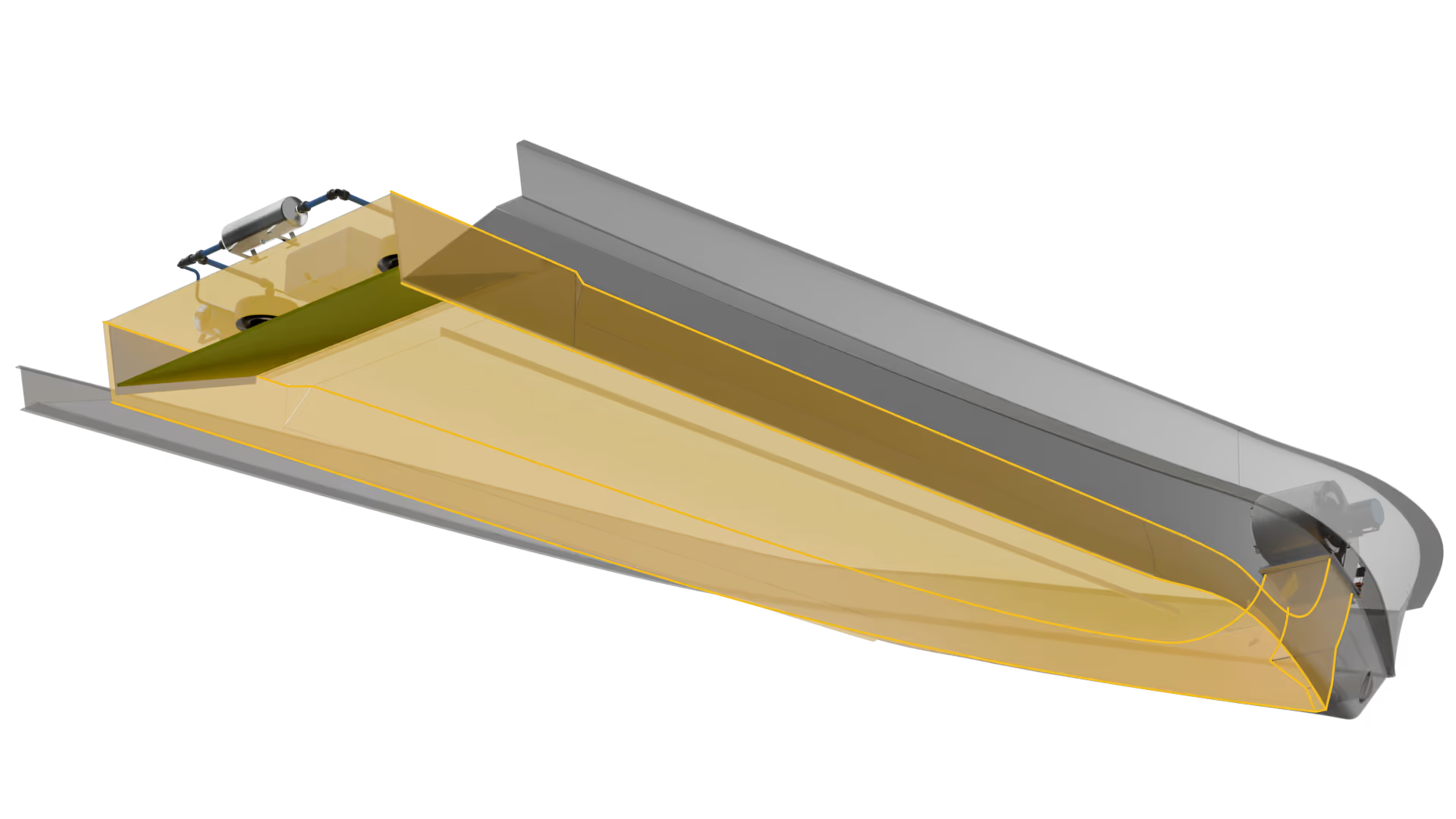
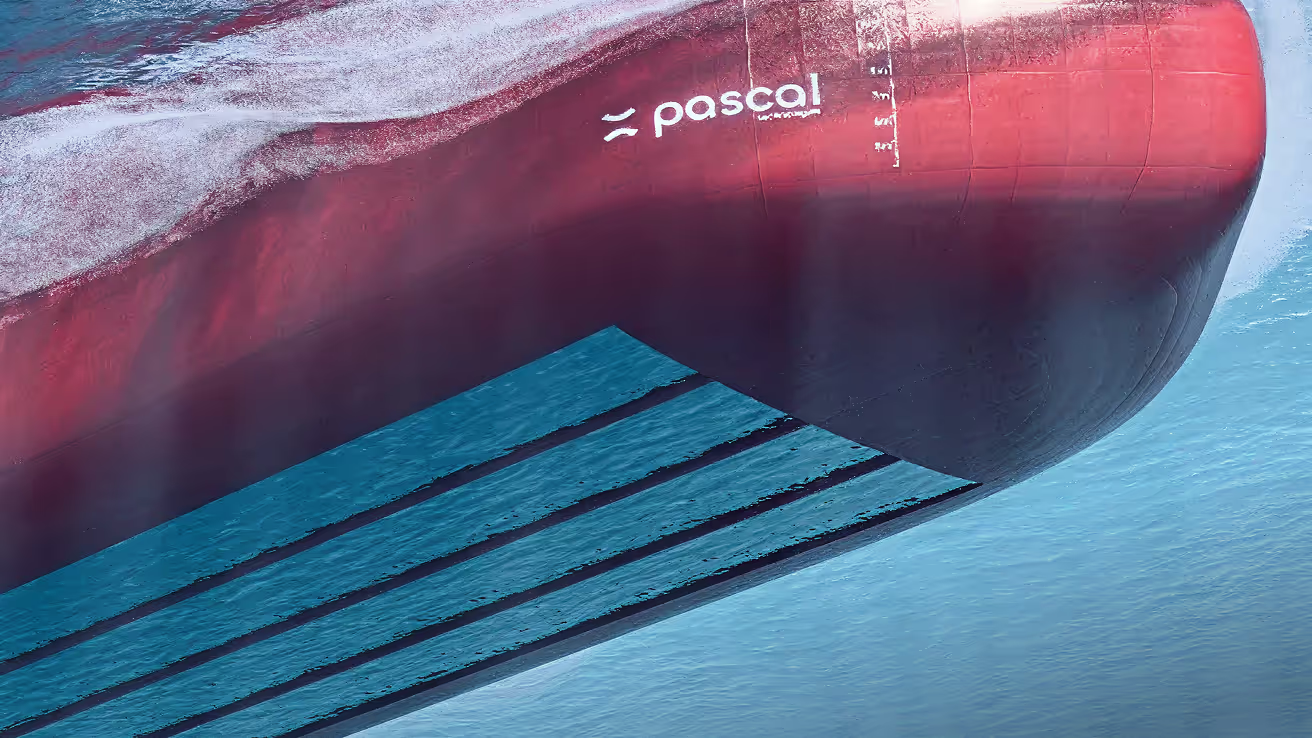
The AirHull features a distinctive shape with a cavity underneath. As the vessel picks up speed, this air cavity fills with air, effectively reducing the boat's resistance by lifting the hull slightly out of the water.
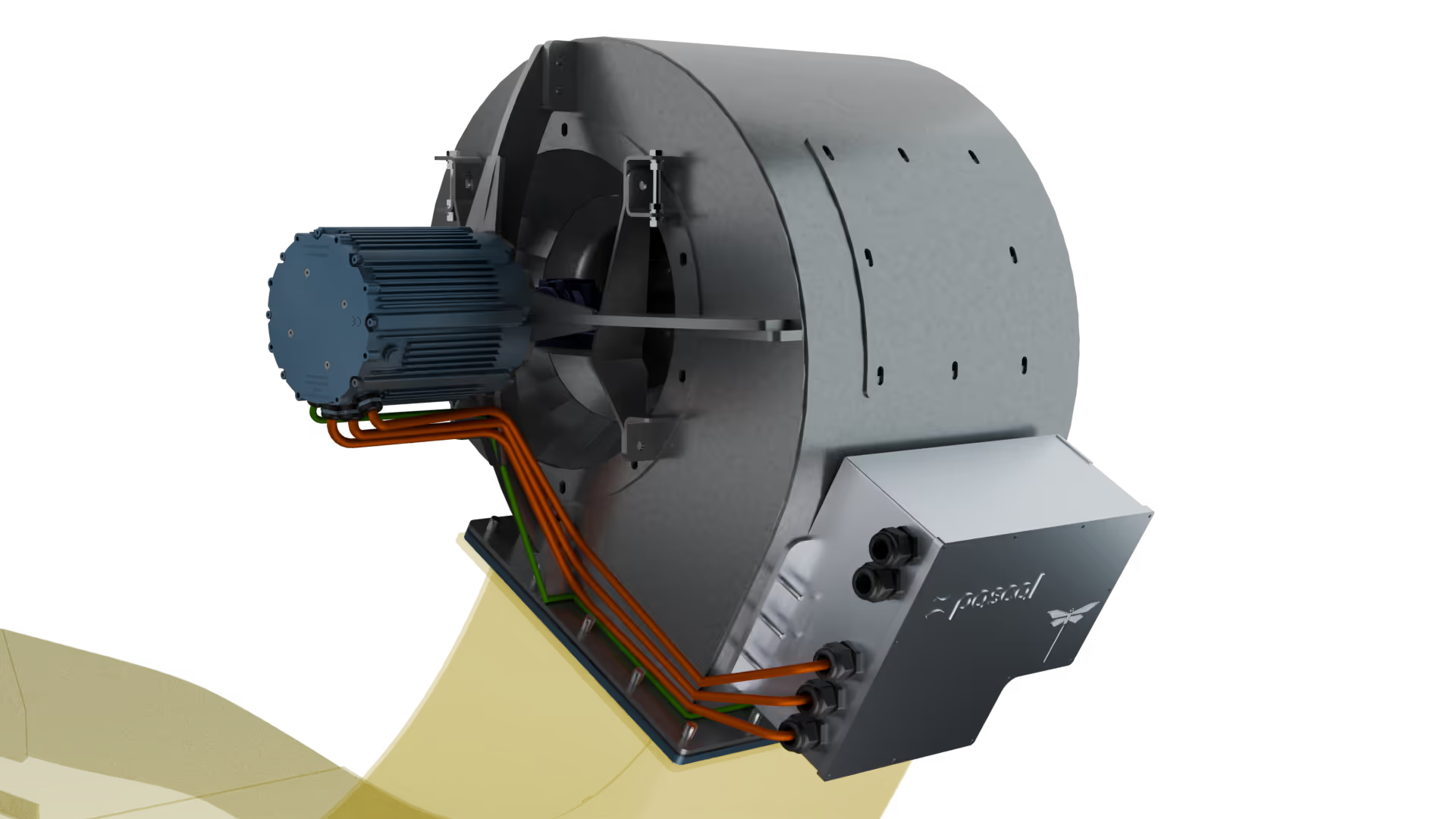
A lift fan, positioned at the bow, pumps air into the cavity, generating overpressure that lifts the boat partially out of the water. This fan is optimized for energy efficiency, low noise, and minimal weight, while ensuring steady air pressure and flow.
The air-filled cavity is secured by a hinged flap at the aft, which extends to maintain the air inside the cavity, ensuring optimal performance of the air system.
The ride control system automatically manages the fan and flap, ensuring optimal efficiency. Designed for low energy consumption and a comfortable ride, it operates seamlessly to adapt to changing conditions.
For an electric AirHull boat this means roughly doubling the electric range. If you chose a conventional fuelled AirHull boat you can increase the range before you need to tank the boat.
Contact us today or book a demo with one of our vessels!
AirHull is delivered as a defined product. We supply the full system that makes the hull ride on air, and we work with your designer or yard to integrate it into the vessel.

Built to fit many vessel concepts. AirHull is a flexible lift system that adapts to vessel type, propulsion layout, energy setup and construction method.
Fast craft
AirHull is designed for high-performance vessels in the 8–40 meter range, including workboats, passenger craft and patrol vessels. The low-drag geometry enhances efficiency, range and ride comfort.

Compatible with any propulsion setup
AirHull operates independently of propulsion, allowing seamless use of straight shafts, outboards, waterjets, electric motors and hybrid solutions without compromising hydrodynamic performance.

Lower power need
Reduced resistance lowers overall power demand, strengthening electric and hybrid configurations while improving fuel economy for diesel and future-fuel vessels.
Yard-friendly
AirHull integrates into aluminium, steel and composite hulls with only light adjustments to thickness and internal structure, fitting naturally into standard shipyard workflows.
Our near term focus is commercial deployment of AirHull on small and medium boats.
In parallel we are working with partners to test and scale the same principles to larger vessels.
We believe that controlled air cavities under large hulls can unlock significant fuel and carbon savings for deep sea shipping over time.
We integrate AirHull into new vessel designs through a close and structured collaboration with boat builders.
We collaborate closely with boat builders from concept to delivery, integrating AirHull seamlessly into new vessel designs while the topside and propulsion choices remain the builder’s responsibility.
By combining deep expertise in hull integration, propulsion interfaces and energy carriers, we support your engineering team through feasibility assessments, design development, construction and system tuning.
After delivery, we provide remote diagnostics, continuous over-the-air updates and ongoing technical support — ensuring the vessel maintains optimal performance throughout its operational life.
We are not a boat builder and we do not design the top side of the vessel. This is typically the responsibility of the boat builder.

From feasibility to sea trials and long-term support, Pascal delivers a smooth and predictable project experience — reducing integration risks and ensuring reliable performance throughout the vessel’s lifetime.
The AirHull is a system that enables planing boats to move more efficiently through water. It works by using an air-filled cavity in the boat’s hull that reduces the resistance by separating the hull from the water. The system uses a fan to compress air into the cavity, which creates an overpressure that lifts the boat partially out of the water. This technology is similar to traditional Surface Effect Ships (SES), but the Pascal AirHull is unique because it uses a special hull design and a flexible flap system to keep the air inside the cavity. The system is controlled by a ride control that ensures the boat moves smoothly and efficiently.
The main benefit of the AirHull is reduced total power consumption at planing speeds compared to traditional hulls. Compared to planing monohulls we see 30-50% less energy consumption at planing speeds.
For instance, our fully electric 27m, 150 pax ferry design has been found to have 30% less consumption than a traditional diesel driven catamaran at 35 knots, even though it carries significantly more weight due to the battery system. (Read more about the design here.)
These numbers are based on the total power consumption of both the propulsion system and fan. The energy consumption of the fan makes up about 5-15% of the total energy consumption depending on the speed.
Our energy savings are verified in towing tank tests and by several full scale prototype vessels. Three of them being an 8m fully electric leisure boat (2022), 20m fully electric ferry concept (BBGreen 2016), and a diesel-driven 17m workboat (2016), which have been tested and provide us with detailed information on the performance of our AirHull technology.
The model test campaigns have been conducted at SSPA in Sweden and Marintek in Norway. These tests provide us with accurate data on the performance of our technology. We also use in-house performance prediction tools based on Computational Fluid Dynamics (CFD) to design and optimize the technology for specific applications and operations.
The combination of model test campaigns, numerical simulations, and prototype testing allows us to effectively demonstrate the energy savings that can be achieved with our technology for any given vessel and ensure that future designs perform as expected.
Our AirHull is designed to be versatile and can accommodate various energy carriers, including batteries, fossil fuels, or hydrogen. However, we are committed to the development of fossil-free solutions and have been focusing on electric propulsion and battery system.
The AirHull is adaptable to different propulsion units, including pods, stern drive, and we are also exploring the possibilities of integrating outboard motors, shaft and water jets. Our goal is to provide a customizable hull platform that aligns with the specific needs and preferences of the end user.
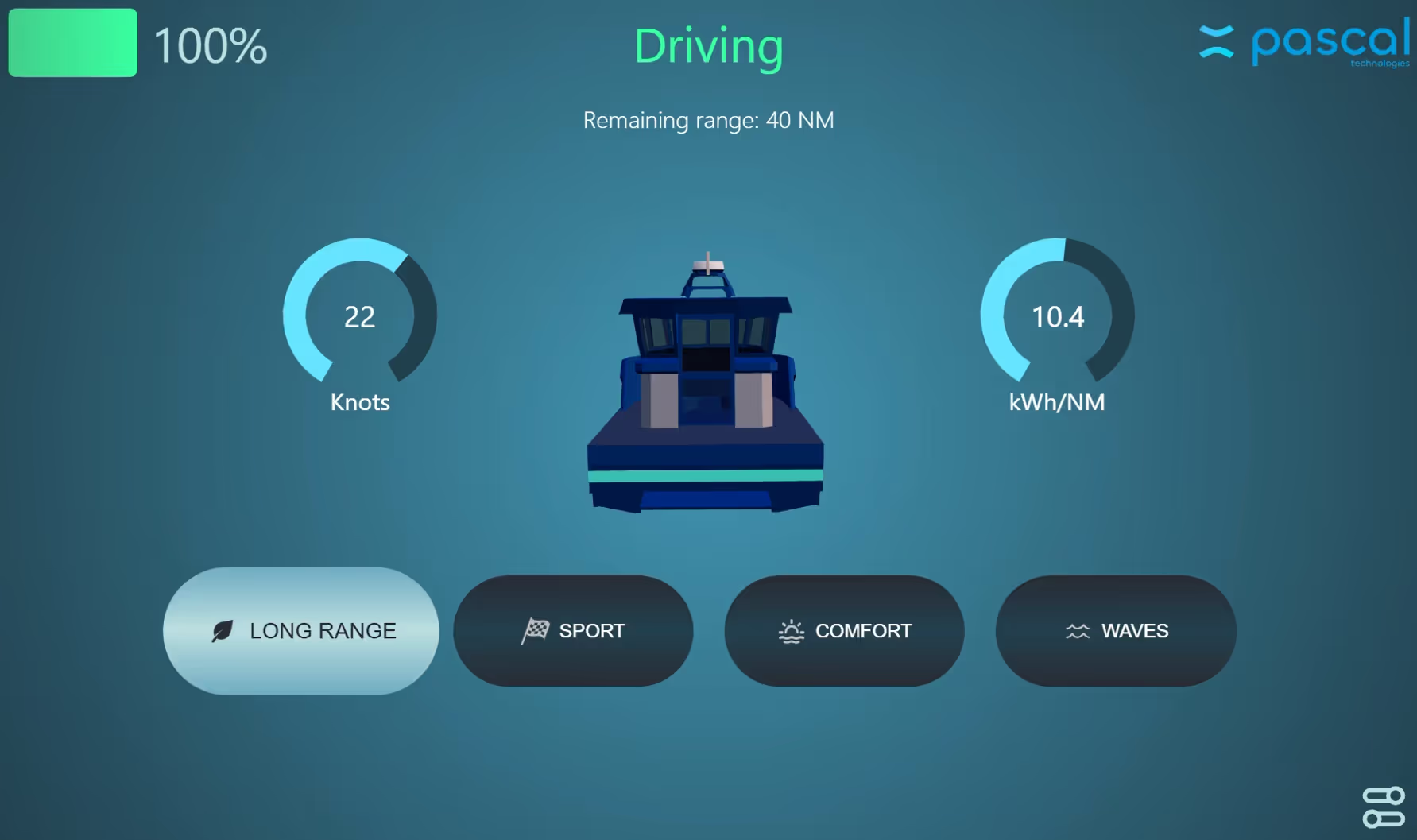
The software that runs on the boat is developed inhouse by Pascal. The software automatically controls all functions related to the AirHull. This means that the captain does not have to operate any extra systems compared to a regular boat. The software connects the boat to our Pascal cloud system, allowing remote monitoring and over-the-air updates even after delivery. This enables a boat that improves over time.
Yes, our hulls are easily constructible and can be constructed in any material; aluminum, glass or carbon fiber or wood for that matter. It all comes down to what makes sense for the specific operation and application and is typically a trade-off between cost, weight and operational aspects.
The efficiency gain from using our AirHull is primarily realized in planing speeds. We work with planing boats in all segments focusing on boats ranging from 6 meters to about 30 meters in length. We already have ready-made concepts for various applications such as fast ferries, work boats, and leisure boats.
As a general note the top speed is not limited by the hull technology. As a matter of fact, surface effect ships in general have often been chosen due to their efficiency at very high speeds. A key parameter to why the Norwegian navy chose it for their Motor Torpedo boats.
One of the main challenges going electric is providing ample range due to low energy density of batteries. A higher top speed will increase the size and weight of the propulsion systems and lower the efficiency, and in effect range. Hence, we typically design vessels with top speed of 25-35 knots, even though our technology could serve higher top speeds.
As the range is tightly connected to the weight of the battery configuration and payload there is not one single answer to what range we can achieve. As an example our workboat concept of 12 m and 6-10 pax payload achieves up to 40 nautical miles in 25 knots with the current propulsion and battery setup, with a top speed above 30 knots. Our 27m electric ferry manages 80 nautical miles on one charge at 36 knots, and is designed to operate a route of 40 nautical miles.
Pascal Technologies delivers an AirHull. The platform consists of the hull lines, air technology, along with the ride control system that regulates and optimizes the performance of the vessel. We can and have already integrated additional components such as propulsion units, batteries, and motors with our ride control system.
Read more about our process and deliveries here.
We work closely with boat builders and designers to integrate our AirHull technology into their concept. Pascal will be involved throughout the design and construction process to ensure that the vessel achieves expected performance. The AirHull system cannot be retrofitted on an existing hull because the hull lines are specifically designed to make the platform perform optimally.
Read more about our process here.
The maintenance needs for a Pascal AirHull will be similar to that of traditional hulls. The ride control system is designed with functionality for over the air updates making it possible to continuously improve the performance of and fix software related issues. The AirHull consists of two moving parts, the fan and the flap, which are designed to be robust and reliable and we expect normal service intervals for these components.
In general electric boats require less maintenance than fossil powered boats (similar to electric cars). The electric drivetrain consists of components with fewer moving parts. This leads to lower need for replacement of worn parts and lubricating oil. The mechanical parts of the drivetrain such as traditional pods and stern drives are expected to have similar performance and maintenance needs as fossil driven boats. Other maintenance on hull, interior, and outfitting, will be the same as for traditional boats.
Have any further questions? Do not hesitate to contact us, we will gladly answer your questions.